Staying consistent with training usually doesn’t fail all at once.
It often starts with motivation. You show up. You put in the effort. Then progress becomes harder to see.
When you’re not sure whether you’re actually getting fitter, motivation slowly drops. And once motivation drops, consistency is the first thing to go.
Showing up starts to feel like effort without reward, and that’s when routines quietly fall apart.
You train. You sweat. You repeat workouts. And eventually you ask yourself: Am I making progress, or am I just going through the motions?
When progress feels invisible, even the best intentions fade.
The problem isn’t effort. It’s unclear progress.
A lot of fitness advice sounds good on paper: move more, stay active, keep a streak going. But vague goals are hard to trust.
Checking off workouts doesn’t always mean you’re improving, and comparing yourself to top performers can make normal progress feel pointless.
Without a clear reference point, it’s hard to tell whether today’s effort is moving you forward or just maintaining the status quo. And when you can’t see progress, motivation slips away, making consistency harder to sustain.
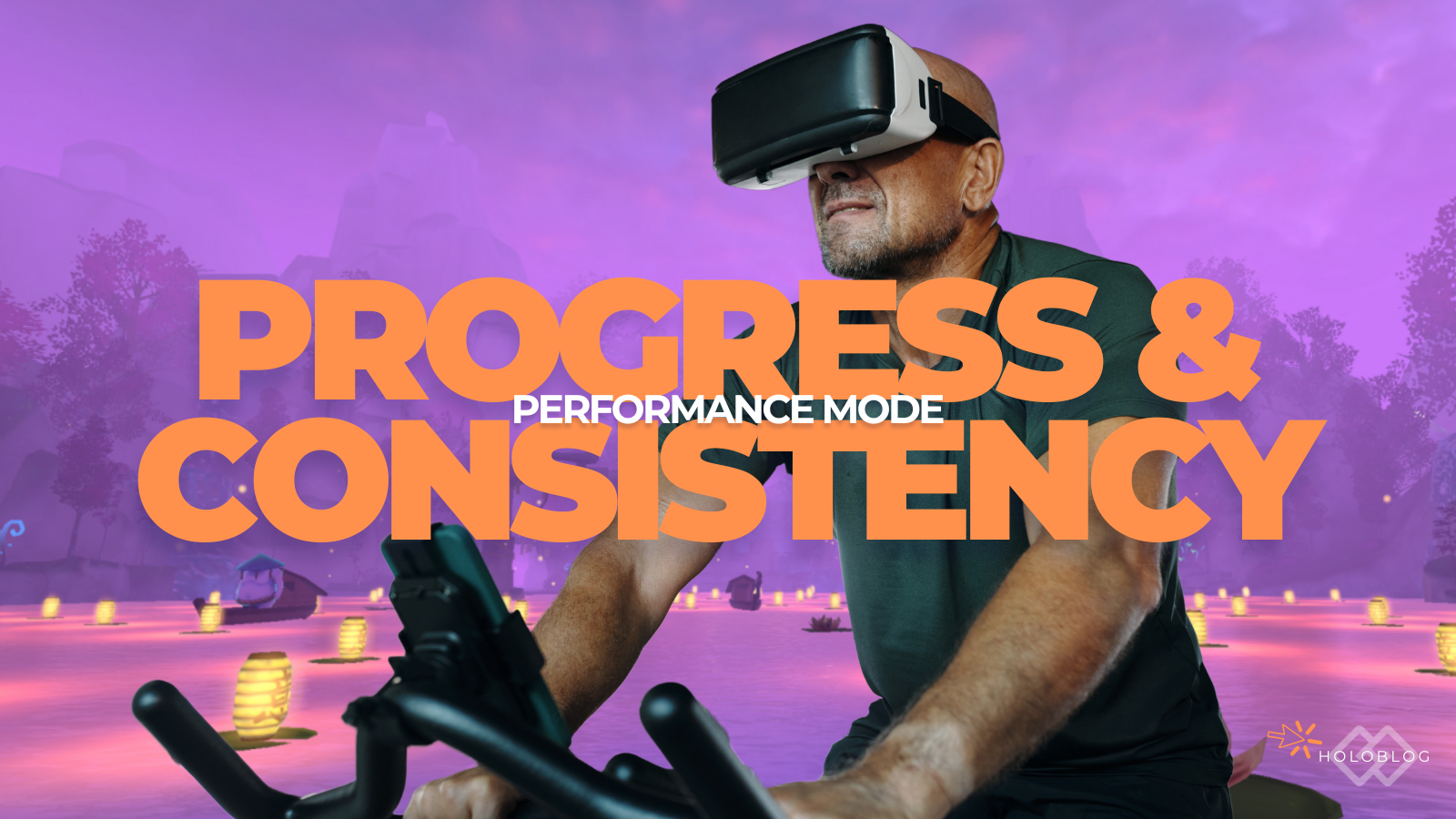
That’s the gap Performance Mode is designed to fill.
What Performance Mode actually is
At its core, Performance Mode is simple.
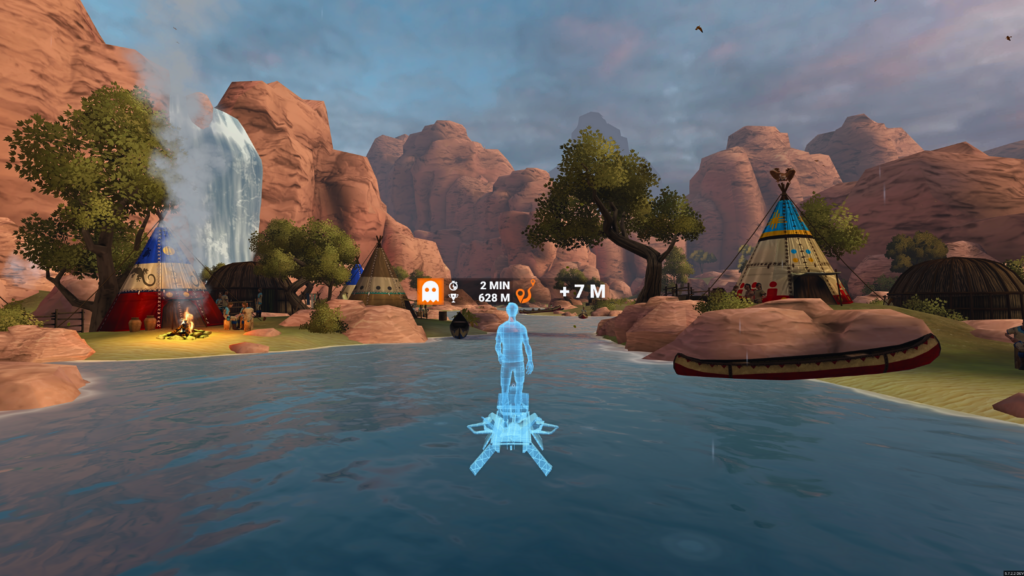
You train for a fixed amount of time (for example, 2 or 5 minutes) and track the distance you cover. That distance becomes a reference point, not a judgment.
HOLOFIT Performance Mode time programs include 2, 5, 10, 15, 20, 30, and 60 minutes.
Instead of asking “Did I work hard enough today?”, you can answer a much more useful question: Did I improve compared to last time?
It shifts focus away from vague effort and toward something concrete and repeatable.
Seeing progress makes consistency easier
When progress is measurable, it becomes motivating.
In Performance Mode, even small improvements count. Covering a little more distance in the same time window is a clear signal that something is changing. You don’t need dramatic jumps.
You just need proof that your effort adds up.
That proof matters more than intensity. It turns training into a feedback loop rather than a guessing game, and it makes it easier to keep showing up because you can see why it’s worth it.
How Performance Mode works inside Challenges
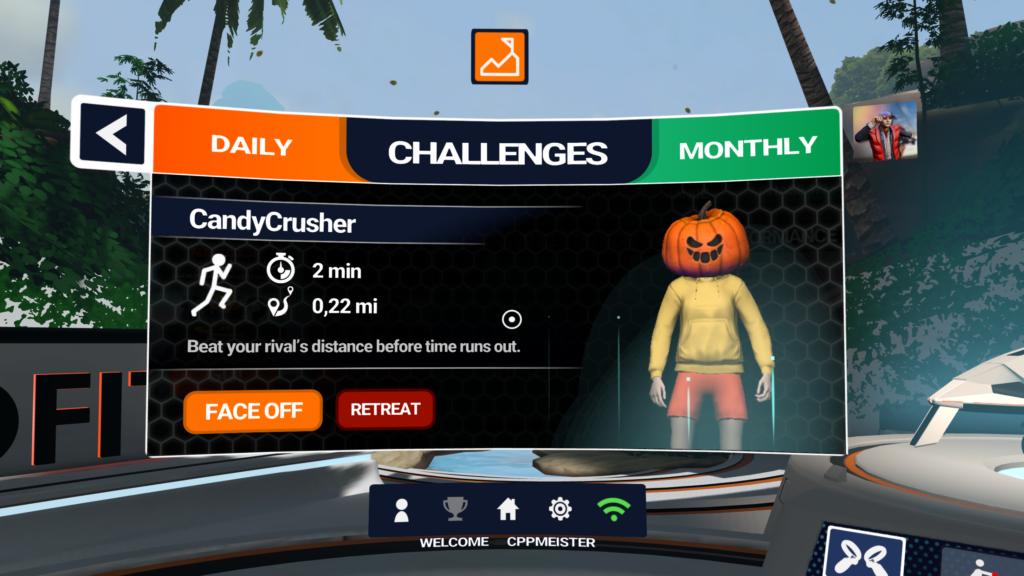
With the latest update, Performance Mode is now part of Daily and Monthly Challenges.
Instead of static tasks or generic goals, Performance-based challenges ask you to beat a distance record set by another community member close to your level. The idea isn’t to chase elite numbers. It’s to compete within a realistic range.
If you beat the record, you complete the task.
If you haven’t set a distance record for the required time yet, the challenge adapts. Your task becomes setting your own baseline first, not beating someone else.
This keeps challenges fair, achievable, and motivating, especially if you’re just getting back into a routine.
When your old records no longer fit you
Fitness isn’t linear. Life happens. Schedules change. Energy fluctuates.
Sometimes your existing records were set during a period when you were fitter than you are right now. Chasing those numbers can feel discouraging instead of motivating, and that’s exactly when people tend to drift away.
Performance Mode accounts for that.
You can reset your records at any time by going to Train → Performance Mode, clearing your previous benchmarks, and setting new ones that reflect your current fitness level.
Resetting isn’t giving up. It’s recalibrating. It allows progress to feel achievable again and makes improvement visible instead of intimidating.
Why this approach supports long-term consistency
What makes Performance Mode effective isn’t competition for its own sake. It’s context.
You’re not comparing yourself to everyone. You’re comparing yourself to where you are now, and occasionally to others who are at a similar point. Challenges adapt to you, and progress stays meaningful even if you have off weeks.
That combination matters. It removes pressure while keeping direction, which is exactly what consistency needs.
How to get started
If you’re new to Performance Mode, start simple.
Pick a time window that feels manageable. Set a baseline. Treat it as information, not a verdict. Over time, use it as a reference to understand how your training is evolving.
With February’s Monthly Challenge coming up, Performance Mode is also a great way to warm up and get familiar with the format ahead of time.
On January 30, we’ll be running a Performance-based Daily Challenge designed exactly for that: a low-pressure way to try the new challenge flow, set or beat a record, and ease into what’s coming next. You can RSVP to the Meta Event and use it as a reminder to jump in when it goes live.

Progress doesn’t have to be dramatic to be real.
Sometimes, seeing it clearly is enough to help you keep going.