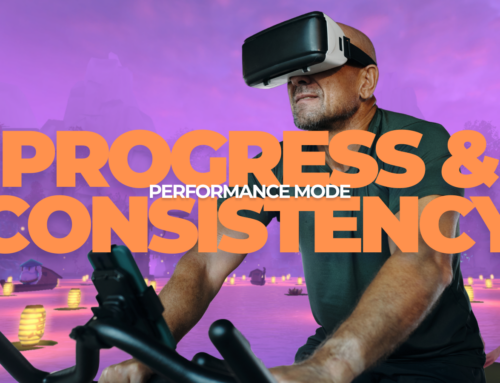

The word performance can sound intimidating.
It brings up ideas of winning, rankings, and pushing harder than you’re ready to. For a lot of people, that’s exactly the kind of pressure that makes challenges feel uninviting in the first place.
But performance-based challenges in HOLOFIT aren’t about winning. They’re about personal progress, measured in a way that’s clear, fair, and realistic.
Performance isn’t about being the best
In traditional fitness challenges, it’s easy to feel like you’re competing against everyone else.
Numbers get big fast, and if you’re not near the top, motivation can drop just as quickly. Performance-based challenges work differently.
Instead of asking you to chase a universal target, they focus on records that make sense for where you are right now. You’re not trying to beat the strongest or fastest person in the room.
You’re working toward a goal that’s close to your current level.
That shift alone removes a lot of pressure.
Progress happens in small, repeatable steps
In Performance-based challenges, completing a task means beating a distance record. That record belongs to another community member at a similar level.
The goal is simple: nudge the bar slightly forward.
Progress doesn’t need to be dramatic to count. A small improvement over a fixed time window is still progress, and those small wins add up. Seeing them clearly is often what keeps people consistent long after motivation fades.
What if you don’t have a record yet?
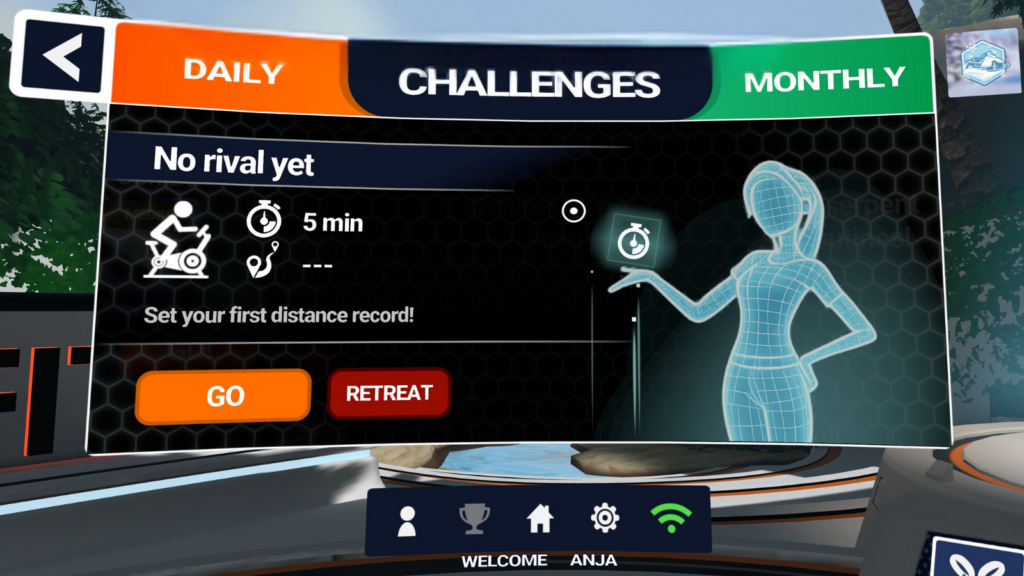
If you haven’t set a distance record for the time a challenge requires, the challenge adapts.
Instead of asking you to beat someone else’s record, your task becomes setting your own baseline first. That baseline gives you a starting point, not a label. From there, improvement becomes something you can track, not guess at.
There’s no penalty for starting fresh. In fact, it’s often the smartest place to begin.
When past records no longer reflect where you are
Fitness isn’t static. Life changes, schedules shift, and energy levels fluctuate.
If your existing records were set during a period when you were fitter than you are now, chasing them can feel discouraging instead of motivating. That’s why Performance Mode allows you to reset your records at any time.
Resetting doesn’t erase progress. It recalibrates it.
Resetting records isn’t something you do once. It’s something you can come back to whenever your fitness, schedule, or energy changes.
By setting new baselines that reflect your current fitness level, challenges become achievable again, and progress becomes visible instead of overwhelming.
Focus on showing up, not proving something
The most helpful way to approach Performance-based challenges is to treat them as feedback, not judgment.
They’re there to help you understand how your training is evolving over time, not to rank you or test your limits every session. Some days you’ll beat a record. Other days you’ll simply show up.
Both count.
Consistency grows when training feels manageable and purposeful, not when it feels like a constant test.

A mindset that lasts beyond one challenge
Performance-based challenges are designed to support long-term training, not just short bursts of effort.
By focusing on realistic benchmarks, adaptable goals, and visible progress, they help turn performance into something approachable rather than intimidating. Over time, that makes challenges feel less like pressure and more like structure.
Approach them with curiosity. Use them to learn where you are, not to prove where you should be.
Progress isn’t about winning. It’s about having a clear reason to keep going.
Or start your 7-day free trial if you haven’t tried HOLOFIT yet